<?xml version="1.0" encoding="utf-8"?>

<rdf:RDF
xmlns:rdf="http://www.w3.org/1999/02/22-rdf-syntax-ns#"
xmlns:dc="http://purl.org/dc/elements/1.1/"
xmlns:sy="http://purl.org/rss/1.0/modules/syndication/"
xmlns:admin="http://webns.net/mvcb/"
xmlns:cc="http://web.resource.org/cc/"
xmlns="http://purl.org/rss/1.0/">

<channel rdf:about="http://blog.retrosynth.com/">
<title>blog.retrosynth.com</title>
<link>http://blog.retrosynth.com/</link>
<description></description>
<dc:language>en</dc:language>
<dc:creator></dc:creator>
<dc:date>2009-06-10T10:58:25-08:00</dc:date>
<admin:generatorAgent rdf:resource="http://www.movabletype.org/?v=3.35" />


<items>
<rdf:Seq><rdf:li rdf:resource="http://blog.retrosynth.com/archives/2009/06/hp_dl6000_scale.html" />
<rdf:li rdf:resource="http://blog.retrosynth.com/archives/2009/04/cold_aisle_cont.html" />
<rdf:li rdf:resource="http://blog.retrosynth.com/archives/2009/04/seven_woods_aud.html" />
<rdf:li rdf:resource="http://blog.retrosynth.com/archives/2009/04/servertech_powe.html" />
<rdf:li rdf:resource="http://blog.retrosynth.com/archives/2008/09/intel_air_side.html" />
<rdf:li rdf:resource="http://blog.retrosynth.com/archives/2008/04/ibm_announces_i.html" />
<rdf:li rdf:resource="http://blog.retrosynth.com/archives/2008/04/alesis_modfx_bi.html" />
<rdf:li rdf:resource="http://blog.retrosynth.com/archives/2008/03/world_class_dat.html" />
<rdf:li rdf:resource="http://blog.retrosynth.com/archives/2008/03/critical_facili_1.html" />
<rdf:li rdf:resource="http://blog.retrosynth.com/archives/2007/09/oberheim_two_vo.html" />
<rdf:li rdf:resource="http://blog.retrosynth.com/archives/2007/09/opcode_sonicpor.html" />
<rdf:li rdf:resource="http://blog.retrosynth.com/archives/2007/09/bay_area_analog.html" />
<rdf:li rdf:resource="http://blog.retrosynth.com/archives/2007/06/usenix_2007_tal.html" />
<rdf:li rdf:resource="http://blog.retrosynth.com/archives/2007/06/critical_facili.html" />
<rdf:li rdf:resource="http://blog.retrosynth.com/archives/2007/06/serge_modular_t.html" />
</rdf:Seq>
</items>

</channel>

<item rdf:about="http://blog.retrosynth.com/archives/2009/06/hp_dl6000_scale.html">
<title>HP SL6000 Scale Out Servers</title>
<link>http://blog.retrosynth.com/archives/2009/06/hp_dl6000_scale.html</link>
<description><![CDATA[<p>If plagiarism is the sincerest form of flattery then the <a href="http://www-03.ibm.com/systems/x/hardware/idataplex/">IBM iDataplex</a> team should take a bow.  The design of the recently announced HP SL6000 scale out series is almost a spitting image of the IBM iDataplex product.  Of course, the IBM iDataplex product had a scary resemblance to Rackable's design that predated both by a number of years.</p>

<p><a href="http://www.hp.com/hpinfo/newsroom/press_kits/2009/extremescaleout/images/Image-15010-045.jpg"><img src="http://blog.retrosynth.com/images/sl6000_rack_002.jpg"></a></p>

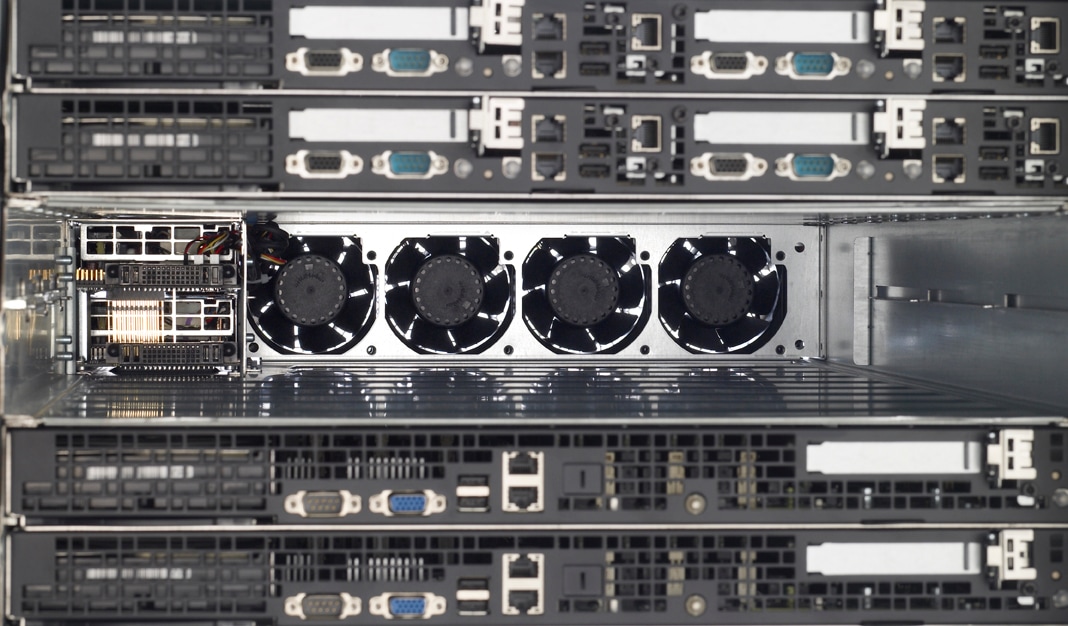
<p>Besides cost considerations, one factor that pushed HP to this design is that their shipping container solution was untenable without front I/O access.  HP needed a shallower chassis with I/O out the front so they could make the container serviceable.  The SL6000 chassisses are still too deep to double the number of racks in the container but I wouldn't discount HP's design team ability to get creative with the new form factor.</p>

<p>Like IBM's iDataplex offering the HP SL6000 is a 2U chassis that contains fans and power supply.  Compute capacity is then added to the chassis in the form of swappable trays.  Unlike the iDataplex offering HP is only offering 1U form factor trays right now.  I really liked iDataplex's four 3.5" disk tray that stacked neatly on top of a 1U compute tray.  IBM also offered a 3U chassis that housed 12 3.5" disks and a single 1U compute tray.  The flexibility of the IBM made it really easy to retask existing hardware for new uses.</p>

<p><a href="http://www.hp.com/hpinfo/newsroom/press_kits/2009/extremescaleout/images/Image-15010-075.jpg"><img src="http://blog.retrosynth.com/images/sl6000_rack_004.jpg"></a></p>

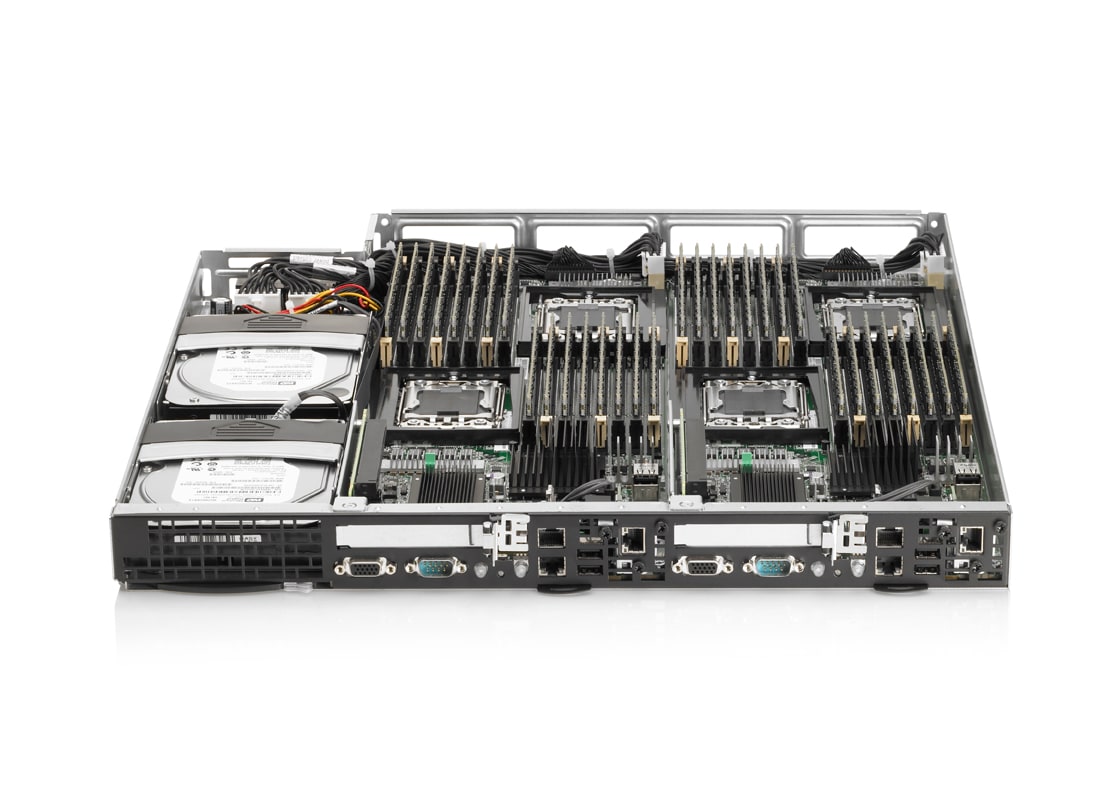
<p>One differentiating feature of the <a href="http://www.hp.com/hpinfo/newsroom/press_kits/2009/extremescaleout/HP_ProLiant_SL2x170z_G6061509.pdf">SL2x170z</a>, which fits two half width system boards on a single 1U tray, is the memory capacity.  There are 16 DIMM slots on the board which is 33% more than Dell, Supermicro, and Quanta half width boards.  Another nifty feature is the integrated status indicators and power switch on the planar.  This eliminates the need for additional wiring and PCB for switches and status indicators.  The biggest downside appears to be the lack of IPMI or any sort of remote management on the planar.  The SL170z uses a <a href="http://www.raritan.com/products/embedded-server-management/">Raritan Peppercon based</a> add-in card which is strange in this day and age of <a href="http://www.aspeedtech.com/products.html">Aspeed</a> and <a href="http://www.serverengines.com/products/servermanagement.html">ServerEngines</a> integrated video and BMCs.</p>

<p><a href="http://www.hp.com/hpinfo/newsroom/press_kits/2009/extremescaleout/images/Image-15010A-172.jpg"><img src="http://blog.retrosynth.com/images/sl2x170z_002.jpg"></a></p>

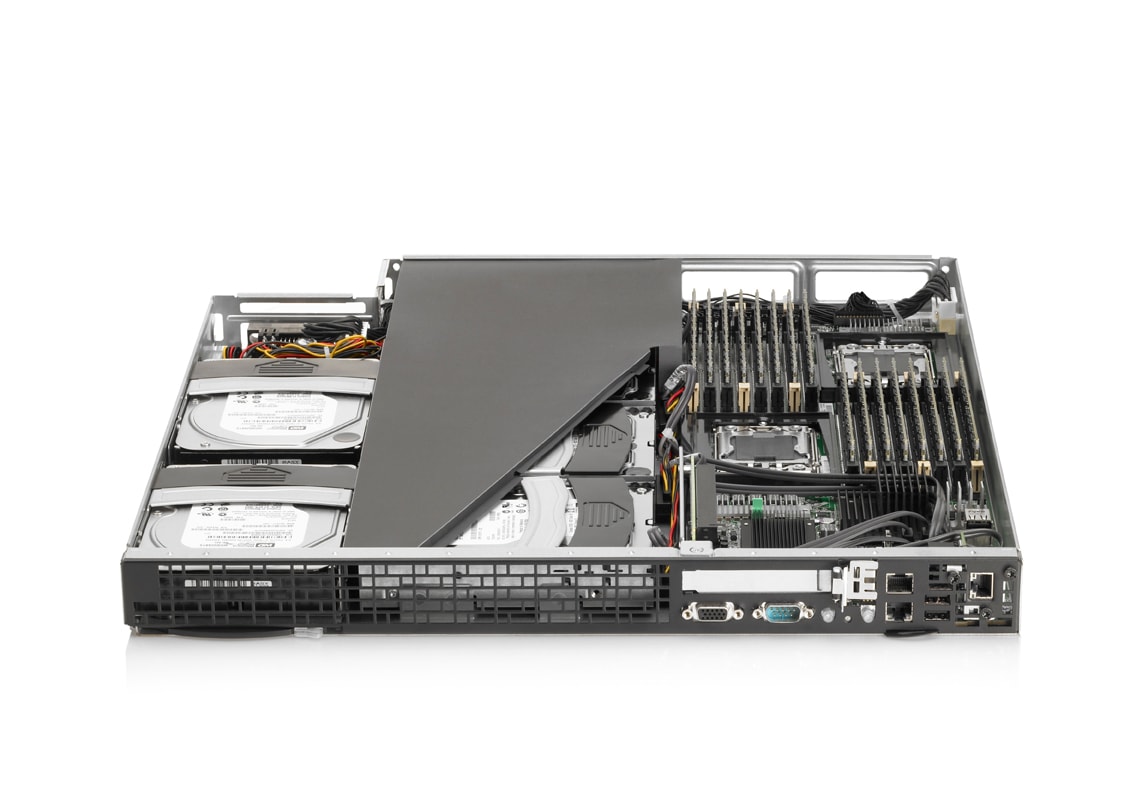
<p>The <a href="http://www.hp.com/hpinfo/newsroom/press_kits/2009/extremescaleout/HP_ProLiant_SL170z_G6061509.pdf">SL170z</a> is a single planar 1U tray with room for six 3.5" disks.  This is a pretty reasonable density for a dual processor system with six disks.  Dell and Supermicro acheive similar density with their scale out offerings but have easier to service drives.  HP will need to come in at a lower price point to make up for the hindered serviceability.</p>

<p><a href="http://www.hp.com/hpinfo/newsroom/press_kits/2009/extremescaleout/images/Image-15010A-169.jpg"><img src="http://blog.retrosynth.com/images/sl170z_002.jpg"></a></p>

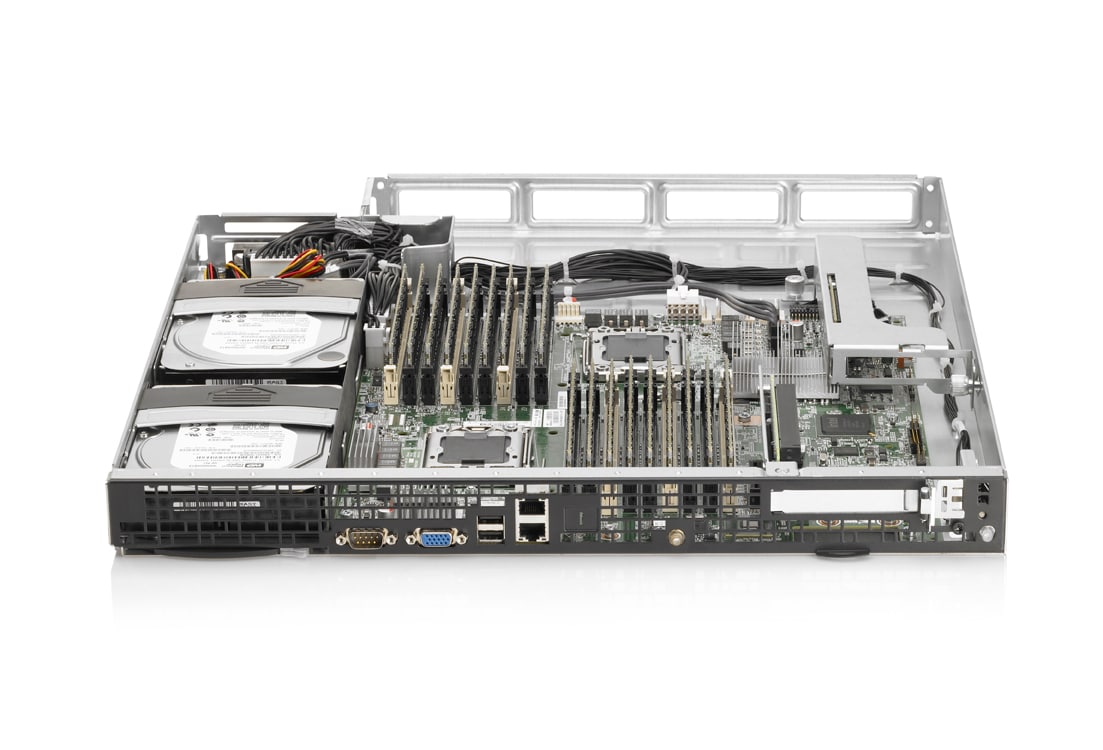
<p>The <a href="http://www.hp.com/hpinfo/newsroom/press_kits/2009/extremescaleout/HP_ProLiant_SL160z_G6061509.pdf">SL160z</a> tray isn't two exciting.  It uses a mostly standard EATX/EPS form factor systemboard in a 1U tray.  It only holds two hard drives but does feature 18 DIMMs slots.  The extra memory capacity is probably only useful for the memcached crowd.  I do like the second oddly placed PCIe slot which allows two half heigh half length add-in cards to be fitted in the 1U chassis.  The second slot would be more useful if the tray could hold more disks.</p>

<p><a href="http://www.hp.com/hpinfo/newsroom/press_kits/2009/extremescaleout/images/Image-15010A-167.jpg"><img src="http://blog.retrosynth.com/images/sl160z_002.jpg"></a></p>

<p>One final thought - HP is offering three power supplies for the 2U chassis - 460, 750, and 1200 watts.  Part of this is out of necessity due to the various configurations possible with each chassis.  The benefit is that the power supply can be sized to the load instead of the typical scenario where the power supply is oversized by a factor of 3 or 4.  Rackable "got" this from the start but even IBM missed this with their iDataplex offering.</p>

<ul>
<li><a href="http://www.hp.com/hpinfo/newsroom/press_kits/2009/extremescaleout/FactSheet-gdrexsoSLLinefs_final.pdf">SL6000 fact sheet</a>

<p><li><a href="http://www.hp.com/hpinfo/newsroom/press_kits/2009/extremescaleout/HP_ProLiant_SL2x170z_G6061509.pdf">SL2x170z fact sheet</a></p>

<p><li><a href="http://www.hp.com/hpinfo/newsroom/press_kits/2009/extremescaleout/HP_ProLiant_SL160z_G6061509.pdf">SL160z fact sheet</a></p>

<p><li><a href="http://www.hp.com/hpinfo/newsroom/press_kits/2009/extremescaleout/HP_ProLiant_SL170z_G6061509.pdf">SL170z fact sheet</a><br />
</ul><br />
</p>]]></description>
<dc:subject>Technology</dc:subject>
<dc:creator>cary</dc:creator>
<dc:date>2009-06-10T10:58:25-08:00</dc:date>
</item>
<item rdf:about="http://blog.retrosynth.com/archives/2009/04/cold_aisle_cont.html">
<title>Cold Aisle Containment and Rack Filler Panels</title>
<link>http://blog.retrosynth.com/archives/2009/04/cold_aisle_cont.html</link>
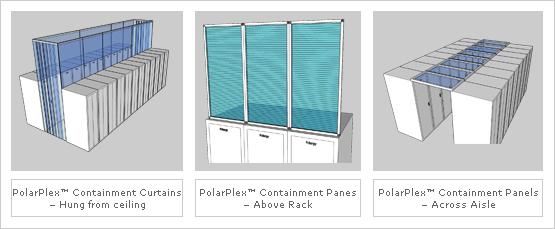
<description><![CDATA[<p>I met the president of <a href="http://www.polargy.com">Polargy</a>, Cary Frame, today at a <a href="http://www.servertech.com">Server Technology</a> event.  Polargy makes cold and hot aisle <a href="http://www.polargy.com/products/polarplex/containment.php">containment products</a>.  Their polycarbonate and extruded aluminum panels look a bit nicer than other solutions I've come across.  Polargy typically uses vinyl curtains for end of aisle containment.</p>

<p><img src="http://blog.retrosynth.com/images/polargy_polarplex.jpg">

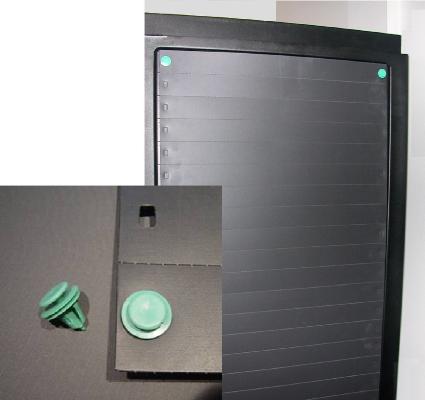
<p>Polargy also represents other manufacturers' product lines such as <a href="http://upsitetechnologies.com/index.php?option=com_content&task=view&id=37&Itemid=42">UpSite HotLok blanking panels</a> and <a href="http://www.plenaform.com/PlenaFill.htm">PlenaForm PlenaFill blanking panels</a>.  I've used the HotLok panels for some time and they're well engineered, stack for easy storage, and snap fit for easy installation.  Unfortunately they cost over $5 per 1U panel which is a little pricey to fill a rack if it's only half used.  Enter Plenafill to the rescue.  Plenafill panels are made of ULV94-0 flame retardant polypropylene in perforated die cut 27U size sheets.  There are several types of plastic rivets for attaching the sheets to square hole, round hole, or threaded rack rails.  These should work well for sealing large openings in partially filled racks.  Plenafill panels are about half the cost of the UpSite HotLok panels.

<p><img src="http://blog.retrosynth.com/images/plenaform_plenafill.jpg">]]></description>
<dc:subject>Technology</dc:subject>
<dc:creator>cary</dc:creator>
<dc:date>2009-04-28T16:33:27-08:00</dc:date>
</item>
<item rdf:about="http://blog.retrosynth.com/archives/2009/04/seven_woods_aud.html">
<title>Seven Woods Audio SST-206</title>
<link>http://blog.retrosynth.com/archives/2009/04/seven_woods_aud.html</link>
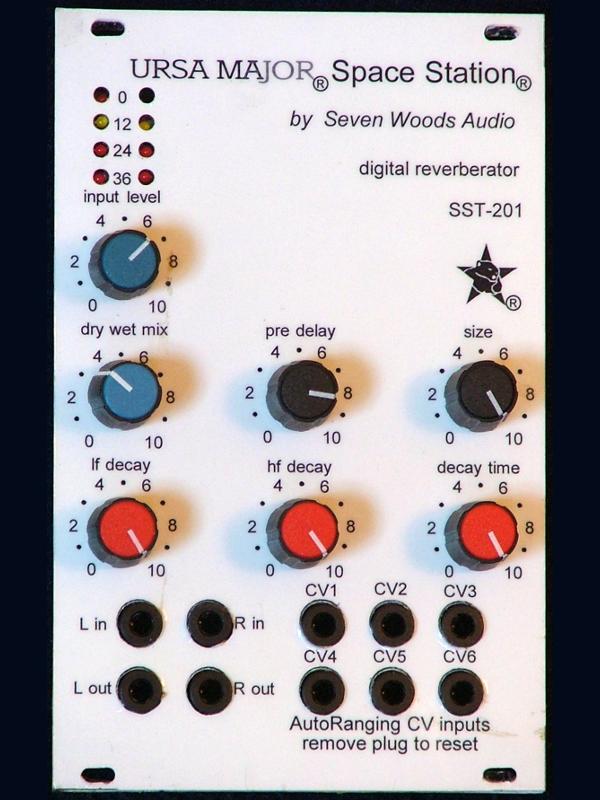
<description><![CDATA[<p>There were several photos of a new <a href="http://www.sevenwoodsaudio.com">Seven Woods Audio</a> SST-201 at Music Messe.  I received a reply from Chris Moore today with more details, along with a photo.</p>

<p><i>The SST-201 is a Euro rack module that essentially incorporates the room program from the SST-206 (and only that program, not the original SST-282 or -206 algorithms.</p>

<p>It has stereo in and out on mono 3.5mm connectors, and six parameters under user control - and under CV control. With no CV plugs inserted, it responds to simple pot setting. When a plug is inserted in say the HF decay jack, control shifts to the input connector and the panel pot (the pot simply scales from 0 to 100% the control voltage. The module goes into a sort of learn mode when a CV source is active, seeking to learn the CV range of the source. After learning the range of max - min, the module scales itself and compensates for the full range whether 0 - 5V, -2.5 to +2.5, etc.</p>

<p>Every attempt at reducing glitching as the parameters are swept will be taken.</p>

<p>A hidden DIP switch allows for Input and output sensitivities ranging from +/- 1.25V input and output level down to +/-10V sensitivity in 3 6dB steps.</p>

<p>Status: I am still working with rev 0 PCB and will be making some changes before proceeding with the first batch. Estimate is 2 months to first, limited run of 25 pieces. US dealer is Analogue Haven.</p>

<p>The price will be approximately $995 USD MSRP.</i></p>

<p><img src="http://blog.retrosynth.com/images/sevenwoods_sst201.jpg"></p>

<p>He mentioned that <a href="http://www.analoguehaven.com">Analogue Haven</a> will be the exclusive US dealer.</p>

<p>I used the 201's bigger brother <a href="http://www.sevenwoodsaudio.com/products.htm">SST-206</a> on a <a href="http://www.youtube.com/watch?v=6yFMbd1LLYA">youtube video</a> featuring the Oberheim Two Voice.  The sound of the 206 is well suited for use with synthesizers.  I hope the sole room program in the 201 will be adequate.<br />
</p>]]></description>
<dc:subject>Music</dc:subject>
<dc:creator>cary</dc:creator>
<dc:date>2009-04-20T17:40:03-08:00</dc:date>
</item>
<item rdf:about="http://blog.retrosynth.com/archives/2009/04/servertech_powe.html">
<title>ServerTech Powerstrips With Per Outlet Sensing</title>
<link>http://blog.retrosynth.com/archives/2009/04/servertech_powe.html</link>
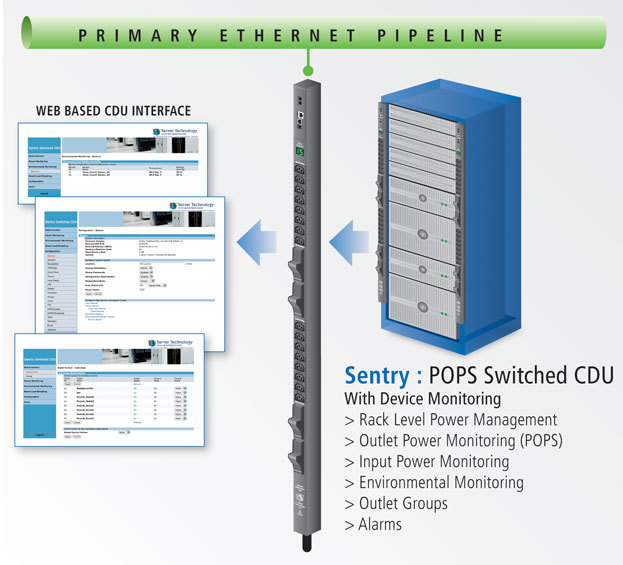
<description><![CDATA[<p>Server Technology has released a new series of power strips with per outlet sensing capability.  Unlike previous generations of power strips which only measure voltage and current at the input to the power strip, the new <a href="http://products.servertech.com/products/pops-per-outlet-power-sensing/">ServerTech POPS</a> strips measure current, voltage, watts, volt amps, and power factor for each and every outlet.  This product will allow IT managers to get a better handle on power consumption of loads within a rack without resorting to using multiple <a href="http://www.wattsupmeters.com/">Watts Up Power Meters</a>.</p>

<p>I hope this capability will encourage the decommissioning of older inefficient servers (can you say Intel Netburst?) and charge back of resources to product and application owners.</p>

<p><img src="http://blog.retrosynth.com/images/servertech_pops.jpg"></p>

<p>The power strips are currently available in several configurations including single phase, three phase, and a new three phase 415V unit.  Pricing should be about 30% more than existing fully managed products but the visibility into power usage offers value that more than offsets the additional cost.</p>]]></description>
<dc:subject>Technology</dc:subject>
<dc:creator>cary</dc:creator>
<dc:date>2009-04-10T10:55:22-08:00</dc:date>
</item>
<item rdf:about="http://blog.retrosynth.com/archives/2008/09/intel_air_side.html">
<title>Intel Air Side Economization Study</title>
<link>http://blog.retrosynth.com/archives/2008/09/intel_air_side.html</link>
<description><![CDATA[<p>Intel announced the results of a ten month long study of air side economizers at one of their New Mexico facilities: </p>

<ul>
<a href="http://www.intel.com/it/pdf/Reducing_Data_Center_Cost_with_an_Air_Economizer.pdf">Reducing  Data Center Cost with an Air Economizer</a>
</ul>

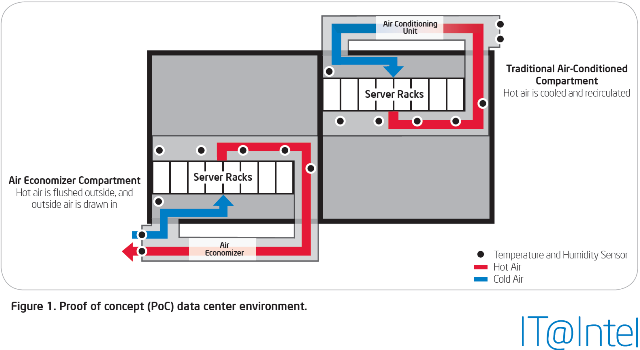
<p>Intel set up 448 blade servers in each of two 500sqft rooms in a modular building space, totalling over 100kw of critical load per room.  They used a commercial ducted DX packaged unit for cooling one of the spaces, and the same make and model cooling package using 100% outside air for the other space.  The unit drawing 100% outside air was configured to start cooling if the intake air exceeded 90F.  That's pretty warm even for high air flow servers.</p>

<p><img src="http://blog.retrosynth.com/images/intel_airside_economizer.png"></p>

<p>Server failure of the outside air room was almost double that of the closed loop room: 4.46% vs 2.45%.  Intel didn't find the increased failure rate to be an issue but I'm sure their server vendors warranting the equipment would disagree.</p>

<p><a href="http://ateam.lbl.gov/team/bill.htm">Bill Tschudi</a> and others at <a href="http://hightech.lbl.gov/">Lawrence Berkeley</a> have done a good bit of research on particulate in datacenters using air side economizers.  It's available here:</p>

<ul>
<a href="http://hightech.lbl.gov/documents/DATA_CENTERS/Shehabi-etal-2008.pdf">Particle concentrations in data centers</a>
</ul>]]></description>
<dc:subject>Technology</dc:subject>
<dc:creator>cary</dc:creator>
<dc:date>2008-09-18T16:25:55-08:00</dc:date>
</item>
<item rdf:about="http://blog.retrosynth.com/archives/2008/04/ibm_announces_i.html">
<title>IBM Announces iDataPlex line</title>
<link>http://blog.retrosynth.com/archives/2008/04/ibm_announces_i.html</link>
<description><![CDATA[<p>The press folks at IBM have jumped the gun and posted a video of their new iDataPlex line in advance of the official announcement tomorrow morning.  The video on their press site does little to demonstrate how it's any different that what is currently available on the market.  There are a few glimpses of the actual hardware 1 minute and 25 seconds into the 140MB windows media file.</p>

<p><a href="http://ibm.com/press/video/iDataPlex_FINAL.wmv">http://ibm.com/press/video/iDataPlex_FINAL.wmv</a></p>

<p>Hopefully there will be better details of the product line tomorrow.  From the brief glimpses in the movie it looks like yet another Rackable clone.</p>]]></description>
<dc:subject>Technology</dc:subject>
<dc:creator>cary</dc:creator>
<dc:date>2008-04-22T18:53:47-08:00</dc:date>
</item>
<item rdf:about="http://blog.retrosynth.com/archives/2008/04/alesis_modfx_bi.html">
<title>Alesis ModFX Bitrman Control Voltage Mod</title>
<link>http://blog.retrosynth.com/archives/2008/04/alesis_modfx_bi.html</link>
<description><![CDATA[<p><object width="425" height="350"> <param name="movie" value="http://www.youtube.com/v/HGeXX0Zyq8E"> </param> <embed src="http://www.youtube.com/v/HGeXX0Zyq8E" type="application/x-shockwave-flash" width="425" height="350"> </embed> </object></p>

<p>Here's a video of an Alesis Bitrman that I modified for external control voltage input.  I think it takes an already good sounding effects box and allows it to really shine.  While it's driven by a quantized voltage source in the video it's exceptionally good with a non-quantized source such as a Serge TKB.  Then you can tune the the frequency shift amount, or ringmod sidebands, to be in tune with the pitch of that particular step.  Loads of fun.</p>]]></description>
<dc:subject>Music</dc:subject>
<dc:creator>cary</dc:creator>
<dc:date>2008-04-20T21:51:11-08:00</dc:date>
</item>
<item rdf:about="http://blog.retrosynth.com/archives/2008/03/world_class_dat.html">
<title>World Class Datacenter?</title>
<link>http://blog.retrosynth.com/archives/2008/03/world_class_dat.html</link>
<description><![CDATA[<p>It was interesting to see a picture of my handiwork on the <a href="http://www.informationweek.com/story/showArticle.jhtml?articleID=206900660">March 3 issue of InformationWeek</a>.  The photo appears to be 3 years old based on the servers shown in the racks.  I'm sure Tellme/Microsoft didn't intend for this picture to ever be public.</p>

<p><img src="http://blog.retrosynth.com/images/infoweek_cover_030108.jpg" width=400 height=542></p>]]></description>
<dc:subject>Technology</dc:subject>
<dc:creator>cary</dc:creator>
<dc:date>2008-03-20T19:00:14-08:00</dc:date>
</item>
<item rdf:about="http://blog.retrosynth.com/archives/2008/03/critical_facili_1.html">
<title>Critical Facilities Roundtable Meeting 03/12/08</title>
<link>http://blog.retrosynth.com/archives/2008/03/critical_facili_1.html</link>
<description><![CDATA[<p>I attended the <a href="http://www.cfroundtable.org/">Critical Facilities Roundtable</a> meeting on Wednesday, hosted at the Altera campus.</p>

<p>The first 20 minutes were for announcements and other meeting business:</p>

<ul>
<li>Charles suggested we pursue research using the power grid as a generator load bank instead of resistive on site load banks.  This of course requires power company cooperation and with PGE in the room it put some pressure on them.
<li><a href="http://hightech.lbl.gov/">LBNL</a> announced they will be releasing a datacenter profiling tool in May.
<li>LBNL will release the results of the LBNL and Sun "Chill Off" this summer.
<li>On Friday April 11 there will be a tour for interested parties of a supposedly Platinum LEED carbon neutral datacenter in Sonoma Mountain Village.
</ul>

<p>Altera and PGE then discussed the cold aisle containment retrofit of the Altera datacenter in building 3.  The datacenter consists of 8-10 rows of 6-8 cabinets with each hot aisle and cold aisle enclosed on one side by a wall.  There were four pre-existing air handlers in the room, two DX CRACs and two water CRAHs.</p>

<p>They gathered the following data:</p>

<ul>
<li>Temperature probes on the inlet and discharge side of the CRACs and CRAHs
<li>Four temperature probes in each cold aisle
<li>Current taps on the CRAC condensers to measure load
<li>Power draw of each rack
</ul>

<p>The data showed that:</p>

<ul>
<li>Only 40% of conditioned air was used to cool the servers
<li>They were conditioning 2.6 times more air than necessay
<li>Server face temperature varried from 68F to 77F
<li>CRAC delta T was only 12F to 18F
</ul>

<p>Based on the gathered data Altera believed they could benefit from hot aisle containment.  They acheived this by:</p>

<ul>
<li>Installing blanking plates on the fronts of all server racks to fill empty rack spaces
<li>Adding clear vinyl strip curtains on the aisle side of each cold aisle
<li>Fabricating sheet metal barriers between the tops of the racks and the drop ceiling
<li>Removing perf tiles from the hot aisles
<li>Ensuring adequate sprinkler head coverage (two per aisle) in both the hot aisles and cold aisles
<li>Installing <a href="http://www.apcc.com/products/family/index.cfm?id=339">APC InRow RC</a> water cooled air handlers in the high density rack line ups
</ul>

<p>After the retrofit Altera was able to cut energy use by 44.9KW with an annual savings of 393MWHrs.</p>

<p>Some notes from the Q&amp;A session:</p>

<ul>
<li>Altera used polyurethane foam between the metal partition wall and the tops of racks to seal up any open areas
<li>The APC InRow units are fed by building chilled water and each have their own VFDs for fan speed control and well as electronically operated balancing valve
<li>The main 30 ton CRAH in the room is used to handle primary cooling and humidity control
<li>If segregation wall is deemed a temporary structure then there is no requirement to refit the sprinkler heads
<li>Altera will be using strip curtains with fusible links above the racks in their next build to avoid relocating sprinkler heads
<li>Sprinklers were already in place above the interstitial area (drop ceiling)
</ul>

<p>Following the Altera presentation <a href="http://www.validusdc.com/">Validus DC</a> gave a presentation on their high voltage DC distribution scheme.  Since I've seen this presentation before I didn't take notes.  They did mention they have a large datacenter getting ready to deploy multiple 2.5mw pods/modules/colos in their next datacenter.  I can only assume this to be one of the big three search engine properties.  While there certainly are benefits to Validus's 540V and 48V distribution strategy, I'd rather see 380V DC distribution all the way to each server instead of stepping down to 48V at the row or rack level.  This would cut out another stage of conversion and associated losses.</p>]]></description>
<dc:subject>Technology</dc:subject>
<dc:creator>cary</dc:creator>
<dc:date>2008-03-17T07:19:33-08:00</dc:date>
</item>
<item rdf:about="http://blog.retrosynth.com/archives/2007/09/oberheim_two_vo.html">
<title>Oberheim Two Voice demo</title>
<link>http://blog.retrosynth.com/archives/2007/09/oberheim_two_vo.html</link>
<description><![CDATA[<p>After wasting a couple days on the aforementioned Opcode Sonicport project I was finally able to import audio from my DAT player to replace the woeful audio the camera's built-in mic captured.  I recorded 15 minutes of various Oberheim Two Voice noodling to show off what the combination of two SEMs and a sequencer can do.  I broke the video up into segments.  This is the first of several.</p>

<p><object width="425" height="350"><param name="movie" value="http://www.youtube.com/v/6yFMbd1LLYA"></param><embed src="http://www.youtube.com/v/6yFMbd1LLYA" type="application/x-shockwave-flash" width="425" height="350"></embed></object></p>]]></description>
<dc:subject>Music</dc:subject>
<dc:creator>cary</dc:creator>
<dc:date>2007-09-22T23:29:47-08:00</dc:date>
</item>
<item rdf:about="http://blog.retrosynth.com/archives/2007/09/opcode_sonicpor.html">
<title>Opcode Sonicport Info</title>
<link>http://blog.retrosynth.com/archives/2007/09/opcode_sonicpor.html</link>
<description><![CDATA[<p>I picked up an Opcode Sonicport SPDIF to USB audio interface many years ago.  The Windows 98 driver and config application were always a bit sketchy and didn't get a chance to improve as Gibson purchased then disbanded Opcode.  As far as I know there was never a release of the config app that ran under Windows 2000 or XP.  Since I didn't like the idea of keeping a Win98 host around for eternity I poked at the internals to see if it's possible to change from analog to digital I/O without writing a config app.</p>

<p>The device uses a Philips/NXP UDA1335H USB to analog and I2S bridge.  SPDIF to I2S conversion is handled by a Crystal CS8425.  The UDA1335H uses an 8051 derivative for housekeeping booting its code from an external EPROM and storing parameters to a 24C16 serial EEPROM.  I've thought of several elegant ways to address the config issue but for now I'm just manually swapping 24C16 EEPROMs after having stored the different configs I used.</p>

<p>The original Opcode Sonicport/Datport driver utility disk for Windows 98 is available <a href="http://www.retrosynth.com/docs/sonicport/sonicport.zip">here</a>.</p>

<p>Images both an analog config and a digital 44.1k 16 bit config available <a href="http://www.retrosynth.com/docs/sonicport/24c16_images/">here</a>.</p>]]></description>
<dc:subject>Music</dc:subject>
<dc:creator>cary</dc:creator>
<dc:date>2007-09-22T23:14:45-08:00</dc:date>
</item>
<item rdf:about="http://blog.retrosynth.com/archives/2007/09/bay_area_analog.html">
<title>Bay Area Analogue Heaven Gathering</title>
<link>http://blog.retrosynth.com/archives/2007/09/bay_area_analog.html</link>
<description><![CDATA[<p>I just returned from the bay area Analogue Heaven gathering at the 21 Grand gallery in Oakland.  A good time was had by all.  My pictures are here: </p>

<p><a href="http://www.retrosynth.com/slideshow/20070909_baah/">http://www.retrosynth.com/slideshow/20070909_baah/</a></p>

<p>Additional photos by Jim Whittemore here:</p>

<p><a href="http://synchro1.smugmug.com/gallery/3454091">http://synchro1.smugmug.com/gallery/3454091 </a></p>

<p>and Jon Schatz here:</p>

<p><a href="http://www.divisionbyzero.com/ahcali2007/">http://www.divisionbyzero.com/ahcali2007/</a></p>]]></description>
<dc:subject>Music</dc:subject>
<dc:creator>cary</dc:creator>
<dc:date>2007-09-09T21:35:07-08:00</dc:date>
</item>
<item rdf:about="http://blog.retrosynth.com/archives/2007/06/usenix_2007_tal.html">
<title>USENIX 2007 Talk - Trends in Datacenter Efficiency </title>
<link>http://blog.retrosynth.com/archives/2007/06/usenix_2007_tal.html</link>
<description><![CDATA[<p>I presented a session at <a href="http://www.usenix.org/events/usenix07/"USENIX 2007</a> covering trends in datacenter efficiency.  The attendees were a mix of HPC users (academic, render farm, search) along with high density corporate users and low density IT users.  PDF of the presentation is available at: <br />
 <br />
<a href="http://www.tinkthank.com/public/usenix07_datacenter_efficiency_trends.pdf">http://www.tinkthank.com/public/usenix07_datacenter_efficiency_trends.pdf</a></p>]]></description>
<dc:subject>Technology</dc:subject>
<dc:creator>cary</dc:creator>
<dc:date>2007-06-21T17:23:15-08:00</dc:date>
</item>
<item rdf:about="http://blog.retrosynth.com/archives/2007/06/critical_facili.html">
<title>Critical Facilities Roundtable Meeting 06/15/07</title>
<link>http://blog.retrosynth.com/archives/2007/06/critical_facili.html</link>
<description><![CDATA[<p>I attended the <a href="http://www.cfroundtable.org/">Critical Facilities Roundtable </a>meeting this morning at AMD's Sunnyvale campus.</p>

<p>I had hoped the first presentation on "Medium Pressure Overhead Ducting – Engineered Solutions" would have some useful data and include statistics on using outside air economizers.  Unfortunately the presentation reviewed a single scenario with oversized supply ducts assisted with fans to provide proper airflow to distant ducts.  There was little data backing up claims of increased fan energy efficiency.</p>

<p>The second discussion around EPA and legislation around datacenter efficiency was quite informative.  <a href="http://www.govtrack.us/congress/billtext.xpd?bill=h109-5646">Bill HR 5646</a> requires the EPA to report to congress by 6/22/07.  The EPA must report on current datacenter trends and consider the energy implications of servers and datacenters.  Bill Tschudi from LBNL believes the following:</p>

<ul>
<li>change will accelerate with top down intervention 
<li>all areas of datacenters need to be addressed 
<li>objective, credible information is needed 
<li>prescriptive approaches won't work due to rapid change in industry
</ul>

<p><a href="http://www.energystar.gov/index.cfm?c=prod_development.server_efficiency">EPA Energy Star Datacenter Energy Efficiency Initiatives</a></p>

<p><a href="http://www.eere.energy.gov/datacenters">DOE Save Engergy Now Program</a></p>

<p><br />
PG&E (local CA power company) sponsored the <a href="http://hightech.lbl.gov/documents/DATA_CENTERS/EconomizerDemoReportMarch13.pdf">LBNL study</a> on particulate and humidity when using outside air economizers.  The brief rundown is that in most cases particulate and humidity can be easily kept within ASHRE guidelines while benefitting from air side economizers.  Even though airborne particulate concentrations werre higher when the economizers werre operating, particulate levels quickly drop once external air intakes were closed.  The speaker commented that even the particulate concentrations measured outside in the parking lot were below ASHRE guidelines.  All sites in the study were in the San Francisco and Sacramento area.  KC Mares from Yahoo noted that they are seeing much higher particulate in the Quincy area due to dust kicked up by local farmers.  More great documents and data available on the <a href="http://hightech.lbl.gov/datacenters.html">LBNL website</a>.</p>

<p><br />
There an unscheduled discussion towards the end on energy reduction due to segregating the hot aisle from the cold aisle.  In the study they prevented air mixing and segregated the aisles with plastic sheeting.  The temperatures measured at the bottom/middle/top of the rack were 55F/68F/79F before the seperation, and 55F/57F/59F after seperation.  Ideally they would have raised the building cold water supply to deliver 70-75F air but were unable to do so in this study.  They measured a reduction in fan energy of 75%.  Tellme is using ducted fan hoods in one of our datacenters to prevent hot/cold air mix and it works really well.  Based on this study it would appear that the datacenter we occupy could significantly reduce fan energy if all cabinets (and other customers) were equipped with ducted racks or hot aisles</p>

<p><br />
Upcoming CF or CF related meetings:</p>

<ul>
<li>7/9/07 - Presentation by Synopsys on Group Computing, also talk on Massive Array of Idle Disks 
<li>7/12/07 - Updates and Standards meeting @ Intel 
<li>7/13/07 - DCD 
<li>7/19/07 - Alternative AC and DC power distribution strategies - <a href="http://www.svlg.net/">http://www.svlg.net/</a>
<li>7/20/07 - Next Critical Facilities Roundtable meeting, location TBD
</ul>
 
 
]]></description>
<dc:subject>Technology</dc:subject>
<dc:creator>cary</dc:creator>
<dc:date>2007-06-15T10:13:28-08:00</dc:date>
</item>
<item rdf:about="http://blog.retrosynth.com/archives/2007/06/serge_modular_t.html">
<title>Serge modular track for your listening (dis)pleasure</title>
<link>http://blog.retrosynth.com/archives/2007/06/serge_modular_t.html</link>
<description><![CDATA[<p>Several folks asked (demanded?) that I post some soundclips of my Serge in action. Below is a link to a 10 minute mp3 of the Serge with a free running patch and no sequencers or external controllers. Warning: I recorded this at 2am last night and didn't have my speakers on so there is _way_ too much low end in places.</p>

<p><a href="http://www.retrosynth.com/mp3/m3u/Serge%20Demo%2020070606.m3u">http://www.retrosynth.com/mp3/m3u/Serge%20Demo%2020070606.m3u</a></p>

<p>I patched this up in just an hour or two Monday afternoon. Module/panel list is here:</p>

<p><a href="http://www.retrosynth.com/gear/serge/">http://www.retrosynth.com/gear/serge/</a></p>]]></description>
<dc:subject>Music</dc:subject>
<dc:creator>cary</dc:creator>
<dc:date>2007-06-07T16:24:48-08:00</dc:date>
</item>


</rdf:RDF>